
Inside Anthropic’s Push for Trustworthy AI Agents: An Engineer’s Take on Claude’s Reliability
There is a particular kind of silence that follows a confident wrong answer. The model does not hesitate, does not hedge, does not flag its own uncertainty. It simply states something false with the same tone it uses for something true. For anyone who has shipped an AI agent into production, that silence is the whole problem.
Reliability has become the defining engineering challenge of the agentic era. Capability benchmarks keep climbing, but the questions that actually decide whether a system gets deployed are quieter: Does the agent do the same thing twice? Can you explain why it produced a given output? When it fails, can you find out where? These are infrastructure questions as much as they are model questions, and they are exactly the questions a small group of engineers inside Anthropic is trying to answer.
Gurmeet Saran and the Data Layer Behind Claude
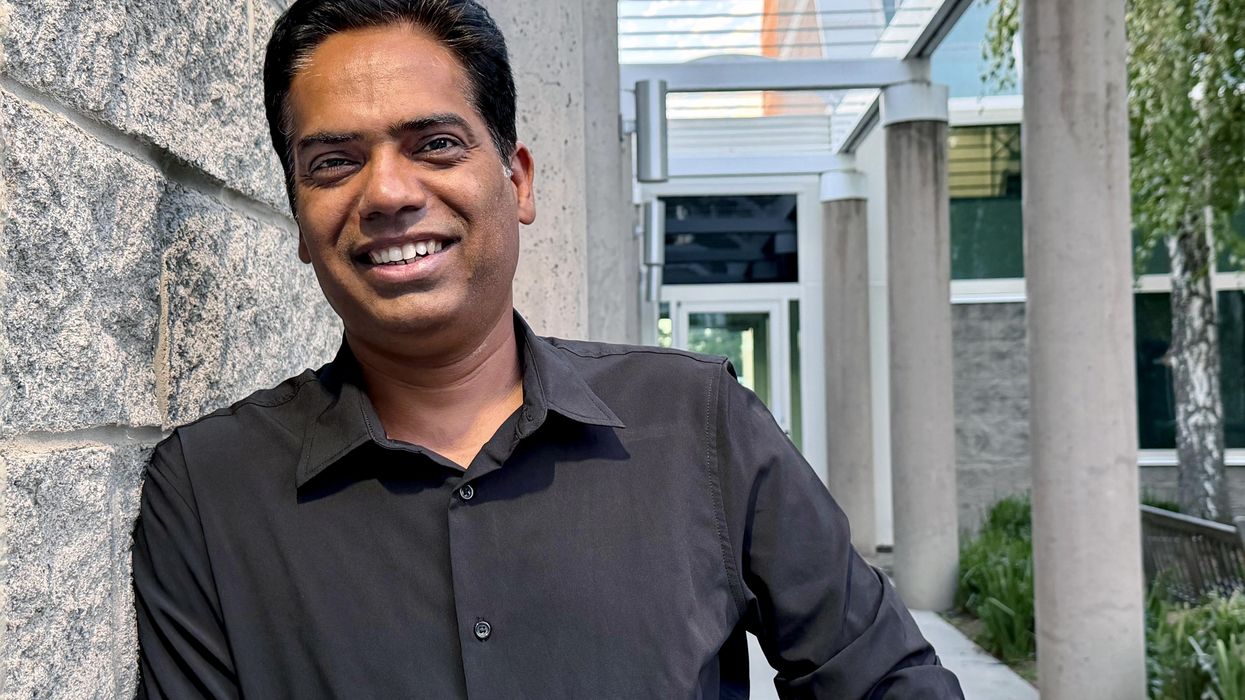
Among those engineers is Gurmeet Saran, an IEEE senior member working at Anthropic on the data systems that sit behind Claude’s answers. IEEE Spectrum has reported on his work; the profile describes a focus that is not on making Claude more fluent or more capable in the headline sense, but on making its answers accurate and on building the infrastructure required to understand the mechanics behind the model’s behavior.
That framing matters. Most public discussion of AI safety gravitates toward alignment research, red-teaming, or policy proposals. Saran’s work sits in a less glamorous layer: the pipelines, diagnostics, and data systems that determine whether a model’s outputs can be traced, audited, and trusted at scale. It is the operational side of safety, and it is where a great deal of real reliability is won or lost.
The IEEE senior member designation is worth noting for what it signals. IEEE describes it as a grade reserved for engineers with sustained, significant contributions to the field, and it places Saran in a community that predates the current generative AI boom by decades. That background shows in the approach: treat the model as a system, instrument it, measure it, and only then claim to understand it.
It is worth being precise about what is and is not public here. The available reporting confirms Saran’s role and the general shape of the work at Anthropic. It does not name a specific system he shipped, a paper he authored, or a metric his team owns. Treat the profile below as a description of a class of engineering work, illustrated by one engineer’s stated focus, rather than as a disclosure of internal Anthropic tooling.
Building Infrastructure for Understanding AI Behavior
The central premise of Saran’s work is that you cannot make a model reliable if you cannot observe what it is doing. That sounds obvious. In practice, large language models are among the hardest systems ever built to observe, because their internal states are continuous, high-dimensional, and not designed for human legibility.
The way in is data. Saran’s team develops infrastructure intended to surface the mechanics behind Claude’s behavior, which in practice means building the plumbing that connects raw model activity to something an engineer can reason about. That includes the systems that collect and organize training and evaluation data, the tooling that lets researchers interrogate why a particular output occurred, and the diagnostics that turn vague complaints like “the model seems worse this week” into something measurable.
What does that look like concretely? A behavioral diagnostic is a test that pins down a specific, checkable property rather than a general impression. Instead of asking whether a model is “good at math,” a diagnostic might ask whether it produces the same final answer when the same problem is presented with the operands reordered, or whether it still returns a correct result when a distractor sentence is inserted into the prompt. The output is not a score out of ten. It is a pass rate on a narrow, reproducible slice of behavior, tracked across model versions so that a drop shows up as a number moving in the wrong direction rather than as a vibe.
A trace is the other half. When an agent handles a multi-step request, a trace records the sequence of events: which tool was called, with what arguments, what came back, what the model did with the result, and where the chain ended. Reading a trace is how an engineer turns “the agent got it wrong” into “the agent called the calendar API with a date in the wrong format, the API returned an error, and the model treated the error string as a successful result.” The first statement is a complaint. The second is a bug report.
Catching a regression is the payoff. If a diagnostic suite runs on every candidate model build, a regression catch means a specific test that passed last week now fails, the trace shows which step changed, and the release can be held before the failure reaches users. That is the difference between finding a problem in a staging run and finding it in a customer escalation.
The industry is starting to feel that pressure from multiple directions. The oversight model that many teams assumed would catch agent errors is itself under scrutiny, with Human-in-the-Loop AI Is Broken: Hugging Face Researchers Say Safeguards Push People Out arguing that review workflows often degrade into rubber stamps. If the human backstop is weaker than advertised, the model and its surrounding infrastructure have to carry more of the load.
From Architecture to Output: Ensuring Reliable Results
There is a gap that every model developer eventually confronts. The architecture can be sound, the training data can be clean, the evaluation suite can be comprehensive, and the model can still produce an output that is confidently wrong. Closing that gap is the technical heart of Saran’s work.
Part of the challenge is that reliability is not a single property. A model can be reliable in the sense of being consistent, returning the same answer to the same question, while being reliably wrong. It can be accurate on average while failing catastrophically on rare inputs. It can perform well on benchmarks while behaving differently in the messy conditions of a real deployment. Untangling these dimensions requires infrastructure that can separate them, which is precisely what data systems built for behavioral understanding are for.
The other part is alignment between what the model is doing internally and what it reports externally. Anthropic has invested heavily in interpretability research, and the operational counterpart to that research is the ability to connect a specific output back to the machinery that produced it. When that connection exists, a factual error becomes a diagnosable event rather than a mystery. When it does not, every failure is a fresh investigation.
This is where the work gets genuinely difficult. Agentic systems add tool calls, memory, and multi-turn state to the picture, and each addition multiplies the number of places a problem can originate. An agent that books a flight is one thing. An agent that books a flight, then a hotel, then reschedules both after a delay, has four or five places where a wrong assumption can compound into a wrong outcome. Trace tooling has to span all of them, which is why the protocol layer matters: MCP Goes Stateless: Building a Python Server with the v2 SDK walks through changes that simplify how agents connect to external tools. Simpler protocols help, but they do not remove the need for observability on the model side.
Why This Matters for the AI Industry
The dependency question is concrete for anyone deploying these systems. A customer service agent that resolves 80 percent of tickets is not useful if nobody can tell which 20 percent it mishandled, or why. A coding assistant that writes correct code most of the time is not deployable if its failures are unpredictable and untraceable. The barrier to adoption is rarely intelligence. It is accountability, and accountability is built from the same diagnostics and traces described above.
The Road Ahead
Anthropic’s reliability work signals a shift in what the industry considers a competitive advantage. The next generation of AI products will not be won on benchmark scores alone. They will be won by teams that can answer uncomfortable questions: Why did the model say that? How do you know it will say the right thing next time? What happens when it does not?
Saran’s contribution, and the contribution of engineers like him, is to make those questions answerable. The infrastructure they build is largely invisible to users, which is precisely the point. Good reliability engineering disappears into the background, leaving only the experience of a system that works. For an industry still learning how to earn trust in its agents, that invisibility is the goal worth chasing.
We covered claude haiku anthropic cheapest in more detail elsewhere.


2 Comments
Comments are closed.