Simulation App Speeds Up Electric Truck Battery Design at Volvo Trucks
Consortium Reports Simulation App Speeds Up Electric Truck Battery Design at Volvo Trucks
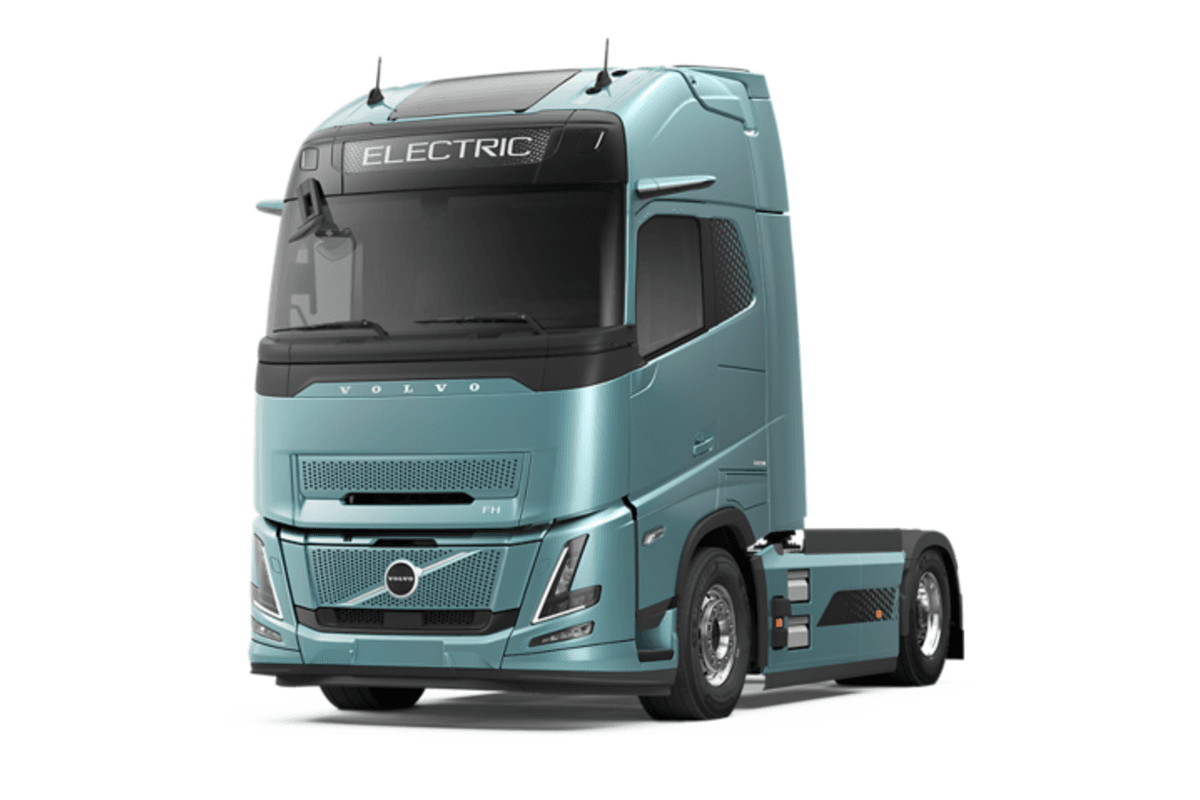
Volvo Trucks has been working with a consortium that used COMSOL-based multiscale simulation and a custom simulation app to optimize the laser-welded battery pack design and manufacturing process for electric trucks. That is the headline claim, and it is a meaningful one for anyone who has watched battery pack development timelines stretch out across design iterations, weld trials and physical validation loops.
The consortium reports that the approach accelerated design work on long-lasting, high-performance batteries, with the aim of improving robustness and lifetime and ultimately enabling longer-range, more reliable heavy-duty electric fleets. It is a technically coherent story. It is also, in its public form, a summary rather than a case study. The numbers, the partners and the pack details that would let an engineer judge whether the workflow is reproducible are not in it.
This piece walks through what the consortium says it did, why laser welding is a natural place to focus a custom app, and what working engineers should ask before treating a vendor summary as a validated workflow.
Why electric truck battery packs are a simulation problem
Heavy-duty electric trucks put demands on a battery pack that passenger cars largely do not. Packs must survive high duty cycles, sustained vibration, wide thermal swings and long service lives measured in years of daily operation. Structural integrity, electrical resistance and thermal behavior are all coupled: a joint that is mechanically sound but electrically resistive becomes a hot spot, and a hot spot degrades the cells around it.
That coupling is what makes simulation attractive. Physical prototyping of packs is slow and expensive, and each design change can trigger a new round of weld trials and validation. A simulation workflow that captures the relevant physics can compress the loop between a design idea and a manufacturability answer. That is the promise the consortium is trading on.
Inside the simulation stack
Two pieces of the stack are described in the summary. The first is COMSOL-based multiscale modeling, which in a battery pack context means coupling weld-scale phenomena (melt pool dynamics, cooling rates, the resulting joint microstructure) to pack-scale structural and thermal behavior, so that a manufacturing detail shows up as a structural or electrical property in the system model. The second is a custom simulation app that packages the laser-welding physics behind a defined set of inputs and outputs, so that design engineers can run the model without rebuilding it. The summary does not say which weld parameters the app exposes or how the two scales are coupled numerically.
The app format is the more transferable idea: the simulation specialist builds the model, and the design engineer runs it. That pattern is increasingly common in engineering organizations, and it raises its own questions about where the model stops being valid, which we return to below.
Why laser welding attracts modeling effort
Laser welding sits at the intersection of manufacturing and performance, which is why it attracts dedicated modeling work. A welded joint in a battery pack has to do several jobs at once.
It carries mechanical load, so weld quality affects the structural integrity of the pack. It carries current, so the geometry and quality of the weld affect electrical resistance. And it is a thermal path, so a poor weld can create a local hot spot that accelerates ageing. Each of these effects compounds over the life of the pack.
Welding is also hard to model well. The physics involve rapid heating, phase change and solidification, and the outcome depends on process parameters such as power, speed and focus. On the face of it, getting the weld model right is a prerequisite for trusting anything the pack-level model says, which would explain why the consortium built the custom app around this step rather than around, say, module-level thermal analysis. The summary does not state that reasoning explicitly.
What the consortium claims
The stated outcomes are directional. The consortium reports that the approach accelerated design work on long-lasting, high-performance batteries. The work aimed to improve the robustness and lifetime of electric truck batteries, with the goal of enabling longer-range, more reliable heavy-duty electric fleets.
Those objectives line up with where the broader industry is pushing. Range and reliability remain the two constraints that matter most for commercial fleets, and both trace back to pack design and manufacturing quality.
What the summary does not do is quantify any of it. “Accelerated” is not a number. “Long-lasting” is not a cycle count.
The reproducibility gap
This is where the summary stops being useful as evidence. The public material does not:
- Name the other consortium members
- Give simulation run times
- Provide accuracy figures against physical measurements
- Specify which battery pack or truck model was involved
- Give a publication date
- Offer quantitative results such as lifetime or range gains
Any one of these omissions would be manageable on its own. Together they mean an engineer cannot reconstruct the workflow, cannot compare it to an existing process, and cannot judge whether the reported acceleration would transfer to a different pack architecture or a different welding process.
The questions worth asking of any simulation case study follow directly from that list, and they are not hostile. They are how engineering organizations separate a promising direction from a proven one.
What was the baseline? Acceleration only means something relative to a starting point. Was the comparison against physical prototyping, against a previous simulation workflow, or against hand calculations? Each implies a different kind of gain.
How was the model validated? A laser-welding model is only as good as its agreement with measured weld geometry, porosity and resistance. Without accuracy figures, the model is an assertion.
What were the run times and the hardware? A workflow that takes days per design point is a different proposition from one that takes minutes. The custom app format suggests the intent was fast turnaround for design teams, but the summary does not confirm it.
Which pack and which truck? Weld behavior and pack architecture are tightly coupled. A workflow tuned to one module design may not transfer cleanly to another.
Who were the partners? Consortium composition tells you a lot about the scope. A laser supplier, a cell maker and a truck OEM bring different physics into the model, and their presence or absence shapes what the workflow actually covers.
None of this is a criticism of the underlying work. It is a description of the distance between a summary and a reproducible result. Research infrastructure has spent years working out how to close that distance, and our explainer on arXivLabs Explained: How arXiv Opens Its Infrastructure to AI Research Tooling covers how one major server handles tooling for research workflows. Engineering case studies would benefit from similar norms around disclosure.
Simulation apps as packaged expertise
The most transferable idea here is not the specific weld model. It is the format: take multiphysics expertise that lives with a small group of specialists and package it as an app that design engineers can run themselves.
That pattern has real advantages. It reduces the queue for simulation support, it enforces consistent modeling assumptions, and it lets design teams explore the space earlier in the process. It also has a known failure mode: when the app is a black box, users lose the ability to recognize when they are outside its valid range. The quality of the app’s documentation and its guardrails matter as much as the physics inside it.
For battery pack development specifically, the appeal is obvious. Weld process parameters, joint geometry and material choices all interact, and the ability to sweep those combinations without a physical trial is valuable. Whether this particular consortium’s app delivers that value at production scale is a question the public summary leaves open.
What to watch for
The next useful disclosure would be a technical paper or a conference presentation with the validation data: measured versus predicted weld characteristics, run times, and at least one quantified design-cycle improvement. A named partner list would help too, since it would clarify which parts of the manufacturing chain the model actually spans.
Until then, the Volvo Trucks consortium work is best read as a signal of direction. Simulation apps built around hard multiphysics problems, deployed to design teams, are becoming a standard way to compress development cycles in battery engineering. The workflow described is coherent. The evidence, so far, is a summary.