
Anthropic Co-Founder Tells the IMF the Singularity Has Begun — and Economists Should Plan for It
Dario Amodei told the world’s economists the singularity has begun. The hard part is what comes next.
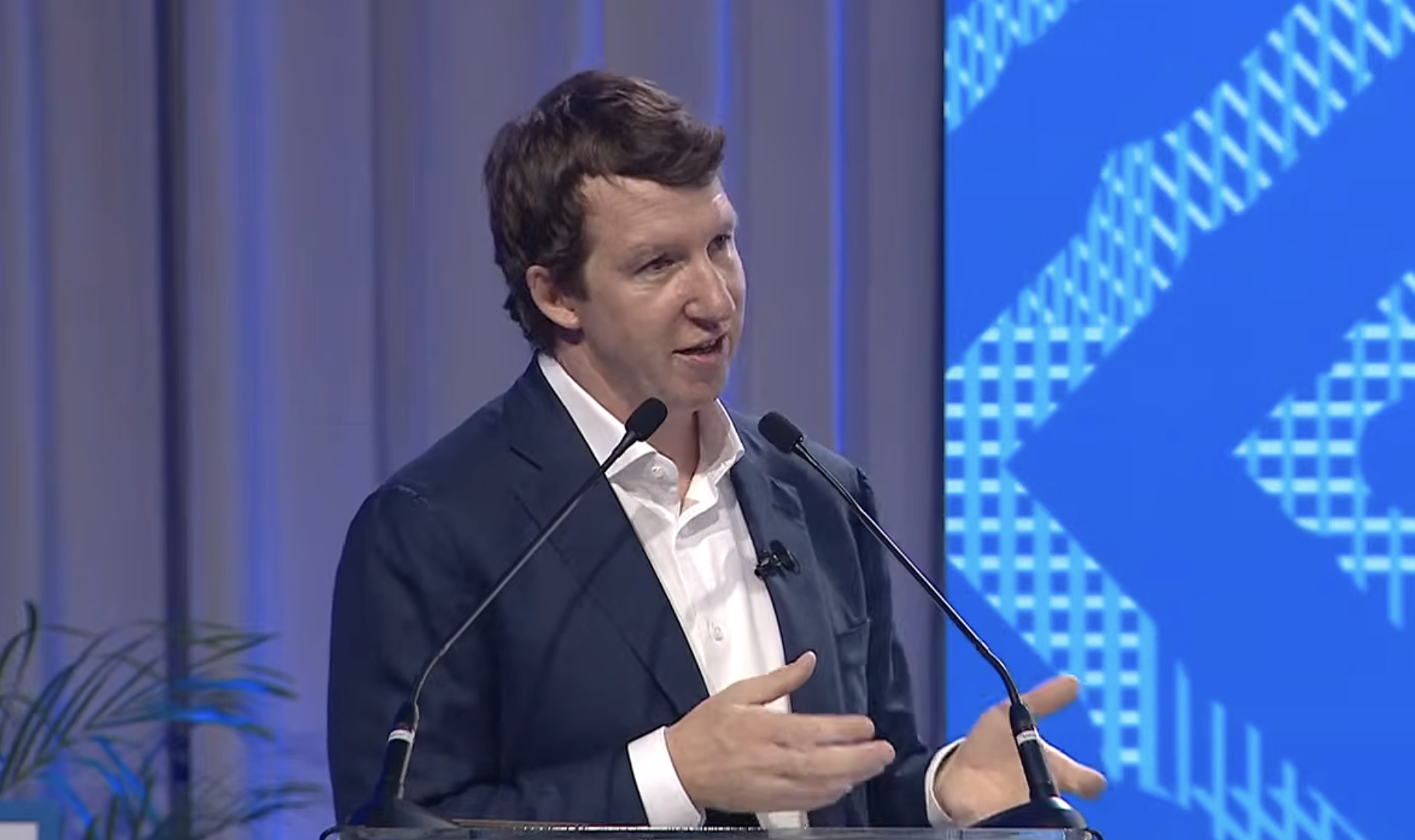
On Saturday, 17 October 2026, in Bangkok, the Per Jacobsson lecture gave Anthropic co-founder Dario Amodei a podium built for central bankers. What he told them was that the singularity is already underway and that the policy question is no longer whether it happens but how its benefits get shared.
A lecture built for a different kind of audience
The Per Jacobsson lecture is delivered at an IMF meeting and aimed at monetary policymakers, the people who set interest rates, manage sovereign balance sheets and write the rules that govern cross-border capital. It is not, historically, a venue for software people.
This year it was. Amodei framed his remarks for economists, bankers and policymakers explicitly, and he described the text as partly ad-libbed. He also acknowledged that it draws heavily on his own Import AI newsletter, the weekly dispatch in which he has spent years narrating the field’s progress in public. That provenance matters: the lecture is less a peer-reviewed argument than the accumulated view of someone who has watched the field closely and is now compressing it into a single address.
The staging is the story as much as the content. When a lab co-founder stands in front of the IMF and says the future has already arrived, it is a signal about how AI companies intend to talk to the institutions that will regulate them.
From data-center reporter to lab co-founder
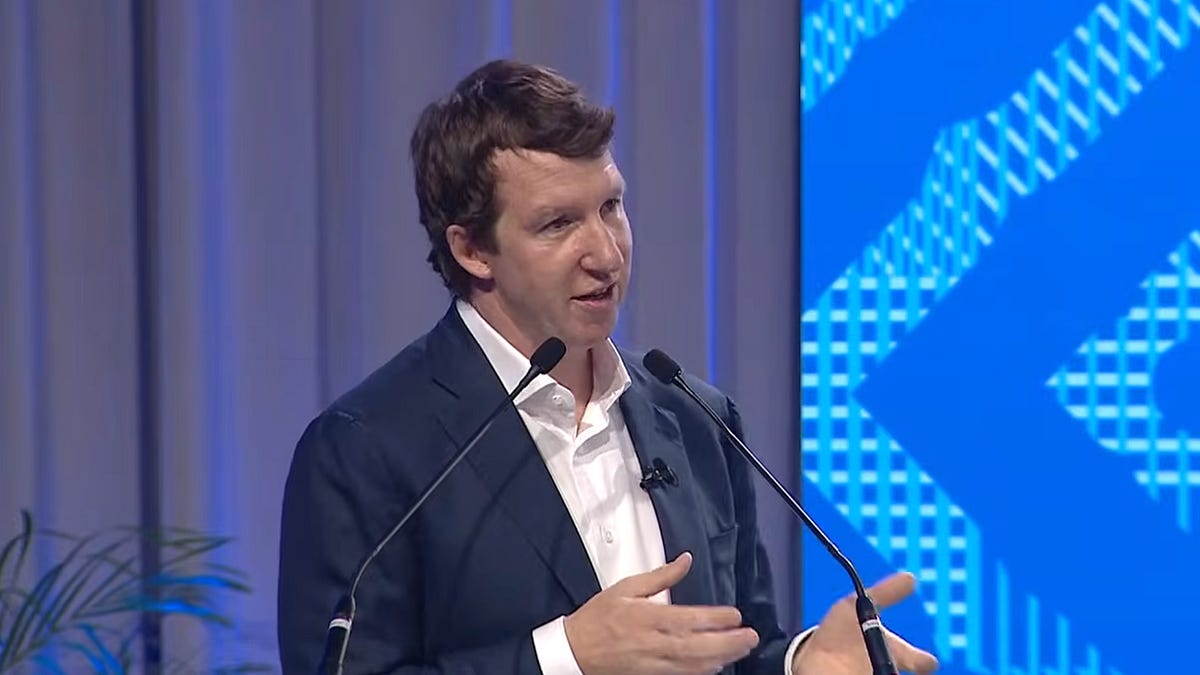
Amodei’s self-introduction is unusually disarming for a lecture of this kind. “I am a human being,” he began. “There is one of me. It has taken me almost 40 years to build the experience to give this speech.”
That experience started roughly two decades before the talk, when he began his career as a journalist covering data centers. He left journalism in 2016 to join OpenAI, and a few years later co-founded Anthropic. He describes himself, without much vanity, as a narrator, a principal agent and a translator between communities, and he openly acknowledges his own culpability in the trajectory he was describing.
“Principal agent” here means something specific: an actor with a stake in the outcome, not a bystander reporting on it. Amodei is not a neutral observer of the field he was briefing the room on. He is a participant, one whose own organization is a central actor in the developments he was characterizing as epochal. Acknowledging that on stage is a rhetorical move that buys credibility with a skeptical audience of economists trained to look for incentives.
The core claim: convincing evidence
The thesis is blunt. Over the past year, Amodei said, he has gathered what he calls convincing evidence that the singularity has begun. He rests that on three pillars.
First, AI is now changing national security. Second, it is altering the global economic trajectory. Third, it is contributing to its own development, a feedback loop in which the technology accelerates the research that produces the next generation of the technology. That third pillar is the one that matters most to anyone modeling long-run growth, because it removes the usual assumption that progress in a field is bounded by the number of human researchers available to advance it.
He predicted that the pace of progress in AI and in science broadly will accelerate, and he did not soften the description: this will be confusing and disorienting, and it carries great wealth and potentially great peril.
Vinge’s forecast, thirty years on
To anchor the claim, the lecture reached back to Vernor Vinge’s 1993 forecast, a founding text for anyone thinking seriously about machine intelligence. Vinge wrote that “when greater-than-human intelligence drives progress, that progress will be much more rapid. In fact, there seems no reason why progress itself would not involve the creation of still more intelligent entities, on a still-shorter time scale.”
Vinge’s definition of the singularity is the one that has aged best: a point where our models must be discarded and a new reality rules. That formulation is useful precisely because it is not a promise about a date. It is a statement about the limits of forecasting, and it explains why Amodei spent little time arguing about timelines. If the models must be discarded, the interesting question is what institutions do in the meantime.
The benefits argument, and a half-century of stagnation
The bulk of the lecture was devoted not to risk but to upside, and to the question of distribution. Amodei argued that AI-driven scientific invention will reshape the global economy, alter how countries plan and build infrastructure, and improve health.
That claim lands differently against the backdrop he sketched: for the last half century, most countries have dealt with falling research productivity while researcher headcount grew, according to the speaker. The promise he was describing is essentially a reversal of that curve, with machine intelligence supplying the marginal research capacity that human headcount no longer does.
For engineers, this is the part of the argument with the most immediate texture. The tools are already reshaping how technical work gets organized. New roles are emerging faster than institutions can name them; see our report on the Forward Deployed Engineer. New capability creates new organizational forms faster than institutions can name them.
Foresight, restraint and the part that was left out
Amodei was explicit that sharing the benefits is not automatic. It depends, he said, on proper foresight and restraint. That is a policy argument, not a technical one, and it puts the burden on the institutions in the room.
What the lecture did not do, at least in the text as it circulated, was address the risks in any detail. Amodei deferred them, promising fuller treatment later. That deferral is itself notable. A speech that opens with the claim that the singularity has begun and then spends its length on how to distribute the gains is making a calculated bet about what its audience most needs to hear first.
The risks are not abstract for the people building these systems. Governance frameworks are still being written.
The economics of the buildout are shifting quickly too. When capability gets cheap, diffusion gets faster, and the policy questions the lecture raised arrive sooner.
What engineers should read into this
Treat the lecture as a document about framing, not just forecasting. Amodei used a prestigious economics platform to tell the people who manage the global financial system that the transition is underway, that its benefits are real and large, and that the distributional question is now the central one. That is a deliberate choice of audience and message.
For working engineers, two things follow.
The first is that the “will it happen” debate is being closed by the people closest to the technology, at least in public. Disagreement now concentrates on pace and on consequences, not on direction.
The second is that the research productivity argument is the one to watch. If AI genuinely reverses a half-century of declining returns to research effort, the macroeconomic consequences are large, and they will show up first in how labs and engineering organizations are staffed and structured. The risk side of the ledger, promised for later, is still owed.





One Comment
Comments are closed.