Articles tagged reproducibility on InferenceWeekly. This page gathers everything we have filed under the term — 7 articles at the last count — from paper explainers to the engineering notes that follow once the code is in front of you.
What every entry here has in common
Each piece follows the same shape. It says what the authors actually did, which baseline they compared against and whether that baseline is the right one for the claim, and whether the artifact runs when you pull it. Where a result depends on a dataset version, a hyperparameter or a particular GPU, the piece says so in the body rather than burying it in a footnote. If the reported gain only shows up under a compute budget you do not have, that is the first thing we mention.
How to read the reproducibility archive
Tags are deliberately narrow, so an archive is the fastest way to see how one idea has developed across the literature we cover. Read the oldest entry first if you want the original framing, or the newest if you want our current position on it. Every tag carries its own feed, so you can follow reproducibility without subscribing to the whole site.
How we judge a paper before covering it
Reproducibility comes first. Is there a repository, are the seeds and splits specified, does the headline number survive a smaller machine? We check the arithmetic on the tables, look at what the ablation actually ablates, and flag a weak baseline in the piece instead of quietly dropping the result. Entries that cannot answer those questions are labelled as a preprint claim rather than a finding, and we link the artifact so you can settle it yourself.
If you want the method behind a result rather than the headline, start with the research digest guide; if you want the shorter briefing that lands every few hours, the news guide explains what goes there and how it is sourced. Corrections and paper tips are always welcome on the contact page.
-
There is no single definitive list of top AI research papers, and treating one as gospel is the fastest way to waste your time. What makes a paper “top” depends on what you need from it.
-
The 97% vs 52% problem The first case is a stock direction predictor built on Amazon price data. The task is simple to state: predict whether the closing price will finish above the opening price on the same day.
-
The reproducibility gap Reproducing an ML experiment means reconstructing a procedure from information scattered across a paper, its released code, and supporting artifacts. When something is missing, whoever is reproducing has to decide what the authors probably meant.
-
Ask an AI agent to improve a machine learning method and it may well produce something that looks like progress. Whether the number on the evaluation actually moves is another matter.
-
An AI review research paper is not one thing. The phrase describes at least three distinct artifacts: a peer review written for a venue, a survey paper that maps a subfield, and a reproducibility study that re-runs someone else’s experiments.
-
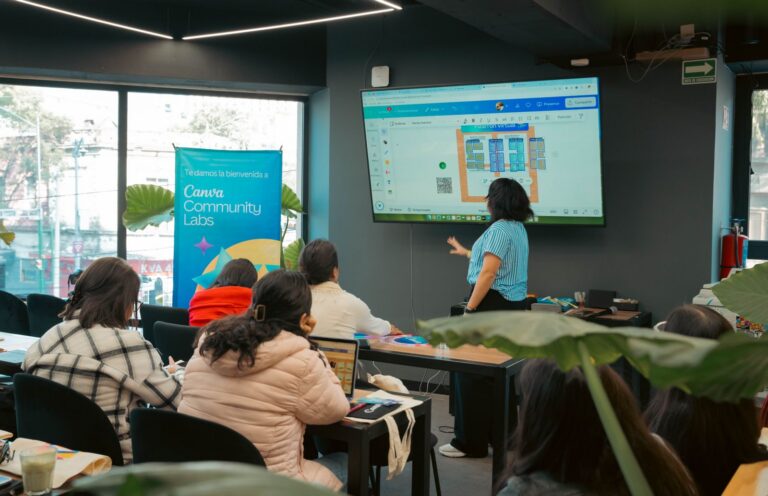
What Workshop AI Means in Practice Workshop AI sits between a seminar and a hackathon. A seminar transfers information; a demo shows a result someone else achieved; a workshop makes participants produce the result themselves, under constraints, with enough scaffolding that they finish.
-
Python keeps resurfacing in AI engineering conversations, and not because anyone has run out of things to learn. On 24 February 2026, KDnuggets published a new cheat sheet on foundational Python , built around a claim that deserves more attention than a download link usually gets: these basics do n