Inside Microsoft Research’s AIIL Group: Closing the Loop Between Real AI Use and Better Systems
The loop at the center of AIIL
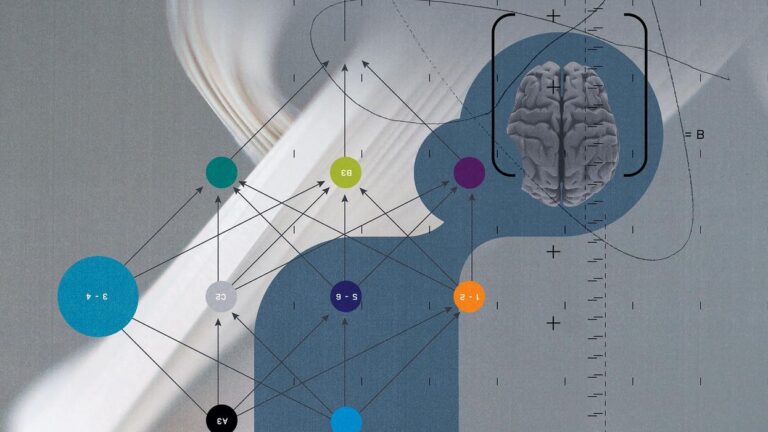
AIIL’s overview describes a cycle rather than a single research bet. The group studies how people use AI, identifies limitations and opportunities in that usage, and then feeds those findings back into evaluation, simulation and learning. The emphasis throughout is on AI operating in realistic, long-horizon workflows, where users, tasks and system behavior all evolve through interaction. That framing treats deployment not as the end of the research pipeline but as a source of evidence.
The group’s choice of the long-horizon workflow as the basic unit of analysis is the thread that ties its three research areas together. It is also an argument against the single-turn evaluation culture that still dominates how assistants and agents are judged.
Single-turn benchmarks are cheap, reproducible and easy to compare, which is why they persist. But they cannot capture what happens when an assistant is asked to carry a task across many steps, when the user’s goals are only partly specified, or when the right answer depends on something the system learned three interactions ago. In a static benchmark, the task is fixed, the inputs are fixed and the correct answer is fixed. In real work, none of those hold. A user learns the system’s quirks and changes how they prompt. The task shifts as intermediate results come back. The system’s own behavior, including what it remembers and how it adapts, changes the next turn. AIIL’s stated focus on “realistic, long-horizon workflows where users, tasks and system behavior evolve through interaction” is effectively a claim that the interesting failures and the interesting gains both live in that space.
Area one: understanding AI use and evaluating realistic workflows
The first of AIIL’s three areas is empirical. The group analyzes large-scale interaction and work traces to see how people and organizations actually use AI, how work practices are changing, and where new capabilities could matter most. Alongside that, it develops measurements and evaluations designed to expose how assistants and agents behave in realistic, evolving tasks.
The pairing matters. Usage analysis without evaluation tells you what is happening but not what to do about it. Evaluation without usage analysis tends to optimize for tasks researchers find convenient to specify. Putting them in the same research area is an attempt to make the second follow from the first.
There is a practical obstacle here that anyone working on agent evaluation will recognize: real interaction data is sensitive, and real enterprise workflows are hard to instrument without touching customer information. Microsoft Research has explored one route around that problem by generating synthetic organizations, complete with users, email threads and org charts that change over time, so that Copilot can be evaluated without touching real enterprise data. That work, described in our coverage of Microsoft’s synthetic-tenant evaluation work, is a concrete example of the kind of infrastructure AIIL’s first area implies.
Area two: user simulation and interactive environments
The second area follows directly from the first. If realistic workflows are the unit of study, you need a way to study them repeatedly, under controlled conditions, without recruiting human participants for every iteration. AIIL builds models and environments that represent users, tasks and multistep interactions, enabling controlled experiments and scalable evaluation and improvement of AI systems.
User simulation is where this gets hard. Simulating a task is a data problem. Simulating a user means modeling someone who has partial information, changing goals, inconsistent patience and a tendency to react to what the system just did. Get it wrong and you build an environment that flatters the system, because the simulated user is too cooperative or too predictable. Get it right and you have something close to a wind tunnel for agents: a place to run long-horizon interactions at scale before anything reaches a real person.
This is also the area where AIIL’s work connects most directly to the broader agent-training literature. Training agents on interactive experience requires an environment that can respond, and the design of that loop is an active engineering question across the field. Our write-up of Microsoft’s Agent Lightning framework covers one take on how training frameworks and interaction loops should relate, which is the same design space AIIL’s simulation work occupies from the evaluation side.
Area three: learning, adaptation and memory
The third area turns observation into method. AIIL works on ways for systems to improve through interaction and experience, including reinforcement learning and post-training, personalization and preference learning, alignment, and memory mechanisms that let agents retain and use knowledge about users, tasks and processes over time.
Memory is the piece most likely to be underestimated. An agent that retains knowledge about a user’s preferences, the structure of a recurring task and the steps of a process it has executed before is a different kind of system from one that starts fresh each session. It is also a different kind of evaluation problem, because the system’s behavior now depends on its history. Personalization and preference learning raise the same issue from the alignment side: a system that adapts to a user is, by construction, harder to evaluate with a fixed test set.
The interdisciplinary stack
AIIL lists artificial intelligence, machine learning, natural language processing, human-computer interaction, recommender systems, information retrieval and computational social science among the disciplines it draws on. The group says this breadth lets it connect behavioral understanding of real-world AI use with new environments, measurements and learning methods.
Read that list as a description of the loop’s required parts rather than a boast about hiring. Computational social science and HCI supply the methods for studying people and work practices. Recommender systems and information retrieval supply decades of experience with evaluation under distribution shift and with modeling users from behavior. ML and NLP supply the training methods. The claim is that closing the loop requires all of them at once, because each stage of the loop feeds the next.
From research to products
AIIL says that, with collaborators across Microsoft Research and product partners, its work has contributed to AI systems and experiences across Microsoft, including Copilot, Office, Bing and Xbox. The group does not break that down further on its overview page, so the specific contribution in each case is not public from this source alone.
What the list does signal is applied intent. These are large, heterogeneous products with very different usage patterns: a productivity suite, a search engine, a gaming platform and an assistant that spans all of them. A group studying long-horizon workflows and user simulation has an obvious use for that kind of surface area, and the products have an obvious use for that kind of research.
What to watch, and how to engage
AIIL says it is interested in working with researchers pushing what it calls the behavioral and algorithmic frontiers of AI, valuing people who think broadly about important problems, go deep on the science and work across disciplines. It directs readers to individual profile pages for more detail on its research.
For engineers who want to act on this, the useful next step is those individual researcher profiles, where publications and methods are likely to be listed, rather than the overview itself.
The open questions the overview leaves are the ones worth tracking. How do you validate a user simulator against real users? What does an evaluation of a long-horizon workflow look like when the task itself changes mid-run? How do you measure whether memory helps or merely accumulates? And what does “closing the loop” look like in practice when the loop runs from a production trace, through a simulated environment, into a post-training run and back into a shipped product? AIIL has named the loop. The evidence that it closes will come from the papers, and those are the ones to watch for.