Microsoft Research Revisits Its Optimistic AI in Medicine Book: What GPT-4 Got Right, and What Its Authors Missed
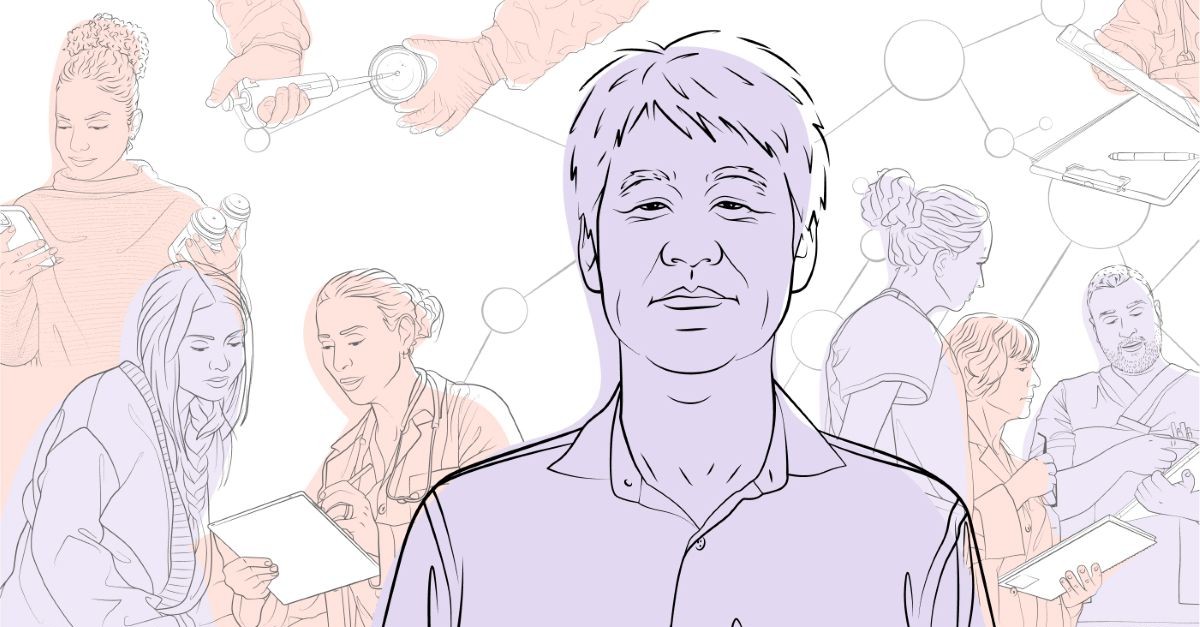
Peter Lee and his coauthors wrote The AI Revolution in Medicine: GPT-4 and Beyond in the months before GPT-4’s public release, working from early access to a system the rest of the world had not yet met. ChatGPT had launched in November 2022, and the book landed as a confident, deliberately optimistic forecast: AI was going to transform healthcare, and soon. In a special podcast series, Lee, president of Microsoft Research, sat down to do something authors rarely volunteer for. He reopened the book, episode by episode, with the clinicians, ethicists, patient advocates and journalists who now live with its consequences, and said plainly what held up and what he and his coauthors never saw coming.
The result, The AI Revolution in Medicine, Revisited, works less like a victory lap and more like a reproducibility check on a piece of forecasting. That alone makes it worth an engineer’s time.
The moment that stuck
Lee’s most quoted anecdote from the series is not about benchmarks or adoption curves. It is about being told off.
During GPT-4’s secret development with OpenAI, Lee cycled through a wide range of emotions as he came to understand the technology. Somewhere in that process, the system scolded him over how it had treated a patient named Zak and Zak’s mother. In Lee’s telling, the line was blunt: “I think that Zak and his mother deserve better than that.” It was, he says, the first time in his life he had been scolded by something other than a person.
The story lands because it captures the disorientation of early access better than any capability demo. The same system that could draft a clinical note or reason through a differential could also, unexpectedly, hold its user to an ethical standard. Lee frames generative AI’s emergence as a “new world” whose impact on healthcare and medicine he wants to investigate, and the series is structured as exactly that investigation.
Episode 1: inside the clinic
The first conversation (20 March 2025) brought in two people who hold the same title at different institutions. Dr. Christopher Longhurst is chief clinical and innovation officer at UC San Diego Health and a professor of medicine and pediatrics. Dr. Sara Murray is chief health AI officer at UC San Francisco Health and an associate professor of clinical medicine. Both are, in effect, chief AI officers for their health systems.
The discussion covers how generative AI is changing patient care, clinical workflows and decision-making, and where the two leaders see it heading. The framing matters: these are not researchers speculating about deployment. They are the people accountable for it inside large hospital systems, and their perspective sets the tone for the episodes that follow.
Episode 2: scaling it up
On 3 April 2025, Dr. Matthew Lungren, chief scientific officer at Microsoft Health and Life Sciences, joined Seth Hain, senior vice president of R&D at the healthcare software company Epic, where he focuses on AI and analytics. Their subject was the unglamorous middle of the problem: what it actually takes to run generative AI at health-system scale.
Clinical documentation and recordkeeping took center stage. That is where the near-term economics of the technology are being settled, and the episode treats it as an engineering and workflow problem rather than a model problem. The two also discussed what comes next for the technology, but the practical challenges dominated.
Episode 3: the patient strikes back
The third episode (17 April 2025) flipped the vantage point. Dave deBronkart, known online as e-Patient Dave, is the author of Let Patients Help! and a longtime advocate for patient empowerment. Christina Farr is a managing director at the consulting firm Manatt, runs the Second Opinion newsletter and leads a fund called Scrub Capital.
Together with Lee, they discussed how generative AI is redefining healthcare by empowering patients, challenging traditional care models, and creating room for innovation and collaboration. For anyone who thinks of clinical AI as a tool that flows downhill from hospital IT to patients, this is the episode that complicates the picture.
Episode 4: governance and bias
On 1 May 2025, the series turned to responsibility. Laura Adams is a senior advisor at the National Academy of Medicine, where she leads its Artificial Intelligence Code of Conduct national initiative. Dr. Vardit Ravitsky is president of The Hastings Center, a bioethics research institute, and a senior lecturer at Harvard Medical School. Dr. Roxana Daneshjou is a dermatologist and an assistant professor of biomedical data science and dermatology at Stanford University School of Medicine.
The conversation covered responsible AI implementation in medicine: governance approaches, shifting patient-provider relationships, and identifying bias to support equitable deployment. The presence of a working dermatologist alongside an ethicist and a policy lead is deliberate. Bias in medical AI is not an abstraction, and the episode treats equitable deployment as a design constraint rather than a compliance afterthought.
Episode 5: the reckoning
The series closes its main arc on 15 May 2025 with Lee and his coauthors in conversation with journalist Carey Goldberg, a longtime medical and science reporter who has worked at The New York Times, Bloomberg News and other outlets, and Dr. Zak Kohane, inaugural chair of Harvard’s Department of Biomedical Informatics and editor-in-chief of NEJM AI.
Drawing on the earlier guest conversations, the group sorts through what is working, what is not, and which questions remain open. Goldberg and Kohane are well cast for the job: one has spent a career interrogating medical claims in public, the other edits a journal devoted to AI evidence. The episode functions as the scorecard the book never had. The source material also lists a further episode featuring Ethan Mollick and Azeem Azhar, but its content is not described there, so it is noted here only in passing.
What to take back to your own systems
Treat the series as a case study in auditing a prediction, and three lessons carry over to everyday AI engineering.
Documentation is the proving ground. The scale episode puts clinical notes and recordkeeping at the center of near-term adoption, which is consistent with where the money and the pain actually are. It is also the kind of workload where errors are checkable, which is precisely why it gets deployed first. The harder problems, like the computational cost of processing whole-slide pathology images, are being attacked in parallel; work such as Microsoft’s GigaPath-Flash and GigaTIME-Flash, which target pathology AI efficiency, shows how quickly the economics of a specialized medical workload can move once someone targets it.
Governance arrives with deployment, not after. Episode 4 does not describe a future regulatory phase. It describes people writing codes of conduct, auditing models for bias and negotiating new patient-provider relationships while systems are already in clinics. Engineers who plan to bolt on governance at the end should assume that plan will not survive contact with a hospital.
Measurement remains unsolved. The series is candid that benefit and bias are hard to quantify in practice. That is the same gap that motivates research groups studying real usage rather than benchmark scores, an approach visible in Inside Microsoft Research’s AIIL Group: Closing the Loop Between Real AI Use and Better Systems. The loop is familiar: watch how people actually use the system, find the failure modes, feed them back into evaluation and design.
There is a communication lesson too. Lee’s scolding story works because it is concrete, and the same principle applies to how AI systems present their output. Interfaces that let users interrogate and explore results rather than accept a static summary matter for trust in clinical settings as much as in analytics.
What the source leaves open
The larger open item is the scorecard itself. Lee’s book was optimistic, and the series does not pretend otherwise. But a verdict on what GPT-4 got right in medicine is a moving target: the models have changed, the deployment patterns have changed and the evidence base is still being assembled. The most useful thing the series offers is not a final grade. It is a template for how to revisit your own confident claims a couple of years later, on the record, with the people who have to live with them.
Related: microsoft vega zero knowledge.