Articles tagged Python on InferenceWeekly. This page gathers everything we have filed under the term — 11 articles at the last count — from paper explainers to the engineering notes that follow once the code is in front of you.
What every entry here has in common
Each piece follows the same shape. It says what the authors actually did, which baseline they compared against and whether that baseline is the right one for the claim, and whether the artifact runs when you pull it. Where a result depends on a dataset version, a hyperparameter or a particular GPU, the piece says so in the body rather than burying it in a footnote. If the reported gain only shows up under a compute budget you do not have, that is the first thing we mention.
How to read the Python archive
Tags are deliberately narrow, so an archive is the fastest way to see how one idea has developed across the literature we cover. Read the oldest entry first if you want the original framing, or the newest if you want our current position on it. Every tag carries its own feed, so you can follow Python without subscribing to the whole site.
How we judge a paper before covering it
Reproducibility comes first. Is there a repository, are the seeds and splits specified, does the headline number survive a smaller machine? We check the arithmetic on the tables, look at what the ablation actually ablates, and flag a weak baseline in the piece instead of quietly dropping the result. Entries that cannot answer those questions are labelled as a preprint claim rather than a finding, and we link the artifact so you can settle it yourself.
If you want the method behind a result rather than the headline, start with the research digest guide; if you want the shorter briefing that lands every few hours, the news guide explains what goes there and how it is sourced. Corrections and paper tips are always welcome on the contact page.
-
Every engineer has a folder full of chaos: screenshots named IMG_20250314_112233. png , invoices scattered across three directories, a dozen PDFs that should be one report.
-
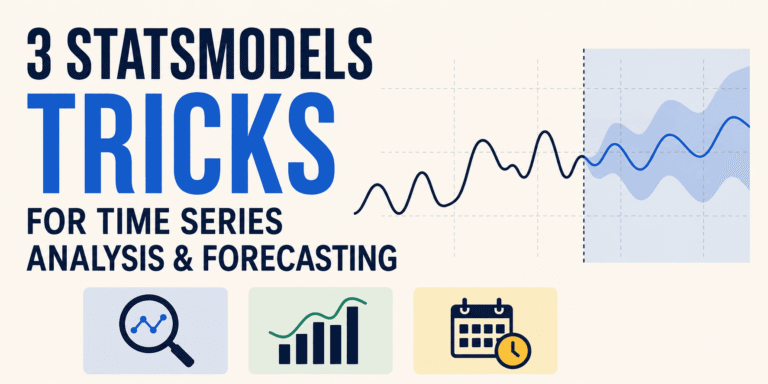
Ask five engineers how they build a time series pipeline in Python and you may get five different stacks. One reaches for statsmodels out of habit, another wraps everything in sktime, a third has quietly standardized on Nixtla’s tooling, and a fourth is running a deep learning model that nobody els
-
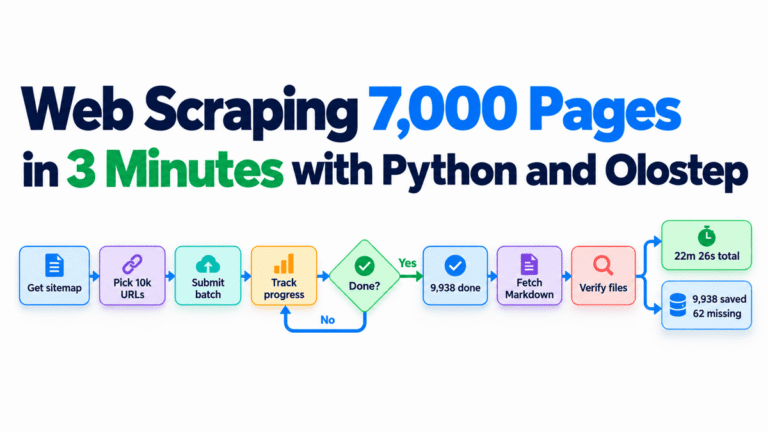
The experiment at a glance The setup was deliberately simple. One Python script, one batch submission, one target: 10,000 pages from MDN’s documentation site.
-
OpenRouter is an API layer that puts dozens of AI model providers behind a single, unified endpoint, and for Python developers it turns provider comparison into a one-string experiment. This walkthrough covers what the layer actually is, how to get a first call running quickly, how to use the free
-
Most LLM applications are, at heart, elaborate autocomplete. You send a prompt, the model returns text, and the program stops.
-
Strategy: when the branch you keep editing is the algorithm The pressure: your training script has an if model_type == “xgboost” block that has grown a sibling for every experiment, and each new scoring rule touches the same function. The strategy pattern pulls each interchangeable algorithm behind
-
Most Python packaging advice was written for a different kind of library. The canonical example is something that calls a database, parses a file, or wraps an HTTP endpoint, and the failure modes follow from there: a connection that times out, a malformed CSV row, a 404.
-
A fitted statsmodels model is not a forecast. It is a bundle of estimates, covariance structure and decomposition state, and most forecasting code touches one attribute of it before moving on.
-
Python keeps resurfacing in AI engineering conversations, and not because anyone has run out of things to learn. On 24 February 2026, KDnuggets published a new cheat sheet on foundational Python , built around a claim that deserves more attention than a download link usually gets: these basics do n
-
Ordered deduplication done right The classic dedup line, list(set(items)) , has a trap that bites hardest in NLP and recommendation pipelines: sets do not preserve insertion order. Deduplicate a token list or a candidate document set this way and the surviving items come back in an order determined